

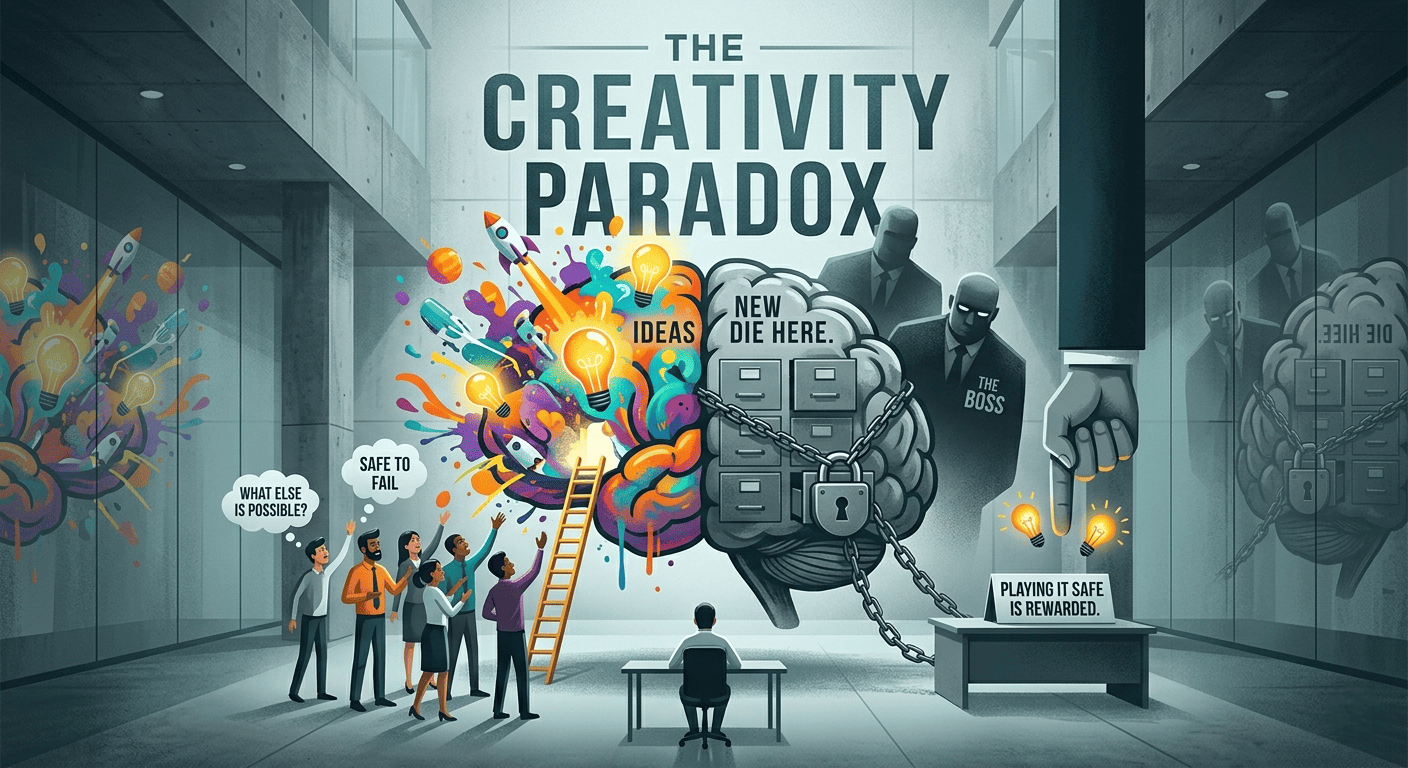
The creativity paradox: Why new ideas die in corporate culture
Everyone says they want creativity. But in the digital entertainment industry, the truth is more complicated. A CEO explains how “playing it safe” kills innovation – and what actually helps it grow.
On paper, this industry is one of the most innovative in the world. It moves fast, adopts new tech early, and handles tricky regulations. It built live video studios from scratch. It figured out mobile before most online shops did. By all outside measures, this industry knows how to invent.
So why do so many companies quietly kill the very creativity that built them?
After years of coaching teams, I’ve learned that the problem isn’t a lack of ideas. It’s a lack of the right conditions. Real innovation is a human experience – not a checklist item or a one-day event. If you don’t build the psychological and cultural foundation for it, you’re not really innovating. You’re just making small, safe changes.
That’s not the same thing.
How your brain reacts to a new idea
Here’s an uncomfortable fact: creativity and fear use the same brain circuits. The part of your brain that handles original thinking shuts down when you feel danger. In corporate life, danger doesn’t have to be real – just feeling real is enough. A culture that punishes failure. A meeting where the boss always speaks first. A review system that rewards safe delivery over trying new things.
These are small threat signals. But your brain doesn’t take them lightly.
When people feel unsafe, they protect themselves. They stick to what worked before. The irony? This happens most in high-performance environments – exactly the kind this industry loves to build.
Research shows that creativity needs four things: psychological safety, free mental space, inner motivation, and permission to fail without being judged. These aren’t “nice to have.” They’re essential.
The human conditions that grow innovation
Some companies treat their people as the heart of innovation. That’s not just marketing – it’s a deliberate choice. It sends a clear message: ideas live in humans, not just in tools or systems.
Compare that to companies where innovation is locked inside a single department – “the innovation team is handling it.” When creativity becomes someone else’s job, it starts to die.
What do truly creative organizations have in common?
First, leaders who are genuinely curious – not just pretending. When a leader asks “what else is possible?” and actually waits for an answer, something changes. Second, they make small experiments normal. They lower the cost of trying. They don’t demand a full business case for every guess. Third – and this is underrated – leaders show vulnerability. They say “I don’t know” out loud. They share what’s not working, not just what is.
That last one is rare. But it changes everything.
Creativity is a leadership skill, not a department
Historically, this industry was driven by rules, marketing, and content. Now technology – especially AI – is changing everything. But here’s the question no one is asking loudly enough: who in your company is creating the conditions for people to actually think?
The companies using AI the fastest are not necessarily the most creative. Speed is not the same as deep innovation. The organizations that will lead the next decade aren’t the ones that bought the most tools. They’re the ones that also invested in the humans using those tools.
The most innovative thing a leader can do is not launching a new product. It’s building a team that feels safe enough to tell you when your last product was wrong – and what they’d do differently. That takes real courage: the courage to not already have the answer.
What actually blocks creativity
Let’s be honest about a few patterns I see again and again.
First: meetings where the most senior person speaks first. Everyone else just agrees. If you’re a leader, try speaking last. You’ll be shocked by what comes out.
Second: reward systems that only celebrate delivery. If your only goal is output, you’ve optimized for repeating the same things – not for exploring new ones.
Third: the myth of the lone genius. This industry often celebrates star players – the visionary founder, the brilliant product lead. But research is clear: the most creative companies are built on trust and teamwork, not individual brilliance.
Why getting this right matters
The companies that will matter in five years are the ones that combine technology with human depth – not one or the other, but both.
New platforms deliver smart, personalized experiences. That’s impressive. But the humans who imagined them, argued for them, tested them, and felt safe saying “this isn’t working yet” – those humans are the real advantage.
Innovation isn’t something you launch. It’s something you make safe. In an industry that loves taking smart risks on products, it’s time to take the same smart risks on people.
“What else is possible?” is always the right question. But the better question right now is: does your culture make it safe to ask?
Speaking last as a leader is such a simple change, yet most bosses never try it. Real curiosity can’t happen if the senior person fills every silence with their own opinion.
The myth of the lone genius is everywhere. But innovation is a team sport. A psychologically safe group will always outperform one brilliant person who everyone is afraid to disagree with.