

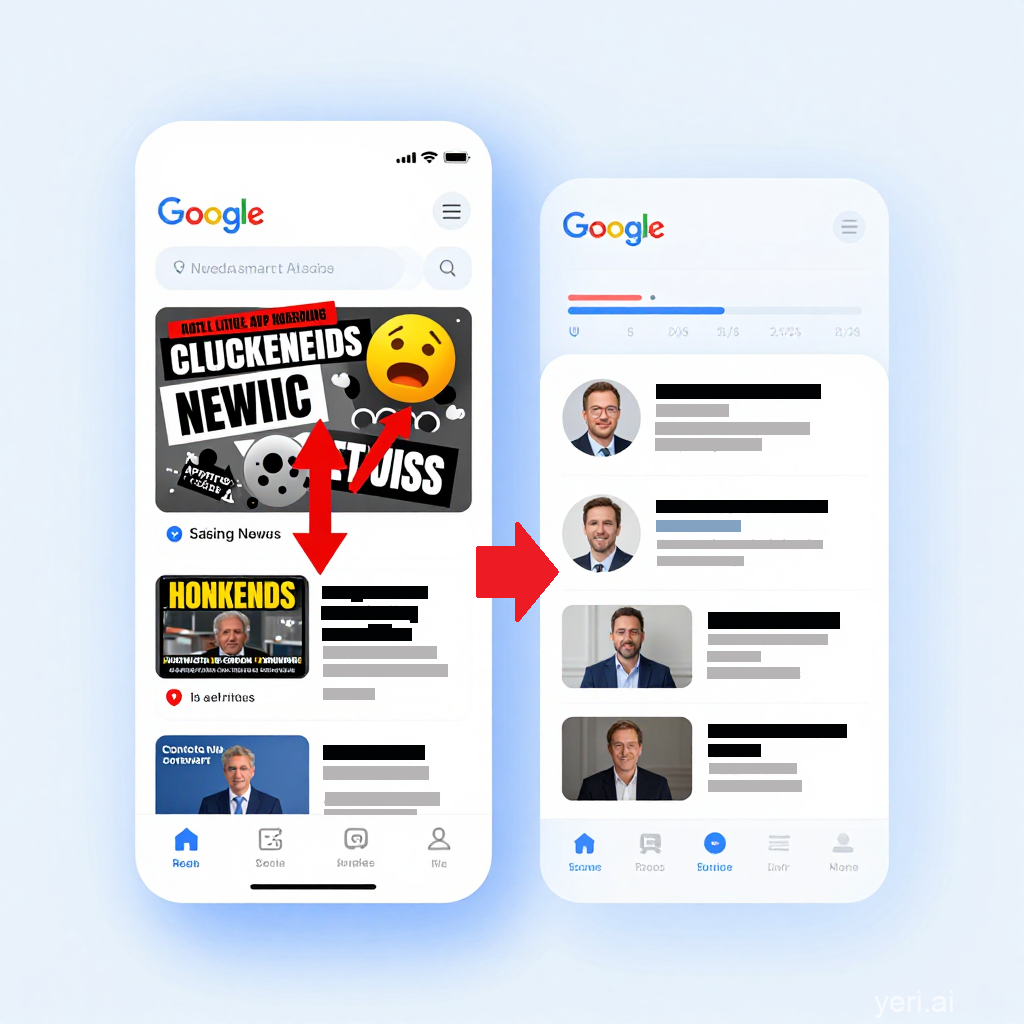
Is Clickbait Dying? A Look at Google’s February 2026 Discover Update
In February 2026, Google released a big update to its Discover feature for English-speaking users in the US. The update took over 21 days to roll out. Its goal? To improve the quality of content people see when they swipe left on their Android phones.
SEO experts at ICS-digital have been analyzing what changed. Here’s what they found.
What’s Google Discover?
If you have an Android phone, you’ve probably seen Discover. It’s the news feed you get when you swipe right from your home screen. Many people don’t love it — but they do click on eye-catching, dramatic stories.
What Did the February Update Change?
Google said the update focused on:
- Showing more locally relevant content
- Reducing sensational stories and clickbait
- Promoting original, in-depth, and timely content from trusted websites
So now, you’ll likely see fewer:
- Comparison pages
- Low-quality betting content
- Shallow match previews
YouTube and Multichannel Strategies Matter More
One expert noticed that their Discover feed is heavily influenced by what they watch on YouTube. For example, after watching guitar videos, they started seeing posts from Fender Guitar on X (formerly Twitter). This shows that SEO and social media need to work together.
What About Affiliates (like betting sites)?
The update wasn’t meant to hurt affiliate sites. But some did drop in rankings because Google now favors stronger, more trustworthy domains overall.
For example, after the update, almost all sites ranking for “best online casino” were replaced — except one (legalsportsreport.com). Also, Trustpilot jumped to #3. That shows Google values trust and authority more than before.
Is This the End of Clickbait?
Not entirely, but Google is clearly trying to reduce low-quality content. They’re no longer chasing clicks at any cost. Instead, they want to show useful, honest, and well-researched information.
What Should Affiliates Do Now?
The article suggests:
- Use honest, non-clickbait headlines
- Add high-quality images (Discover is mobile-first)
- Publish timely, useful content that shows real expertise
- Consider video content — YouTube ranks well in search results
- Build a presence across multiple channels (not just blogs)
A Few Warnings
- Discover traffic can spike and drop quickly.
- Don’t panic right after an update. Wait 1–2 months for things to settle.
- Google seems to be doubling down on domain strength and trust — not just niche relevance.
The observation that the Discover feed is heavily influenced by activity on YouTube is perhaps the most valuable insight in the article—and one that’s easy to overlook. Google’s ecosystem is becoming increasingly interconnected: what you watch on YouTube influences what Discover shows you, and what Discover shows an affiliate influences that affiliate’s visibility in search results. This is essentially cross-signal amplification. A question for ICS-digital: Do you observe any feedback loop—does activity in Discover (clicks on cards) affect the ranking of related YouTube channels? And how can an affiliate who lacks the resources for a full-fledged video blog leverage this symbiosis? Is it enough to embed YouTube playlists with casino reviews (third-party but relevant) in articles to earn a trust bonus from Discover?
Trustpilot ranking third in search results for “best online casino” is, if I may say so, a seismic shift in the world of iGaming affiliate marketing. Previously, it was a pure “battlefield” of review sites offering bonus codes. Now Google is saying: “I don’t care that you write reviews. What matters to me is what other users say about you on an independent platform with a proven reputation.” This brings us back to the article on Schema and co-citations: trust is becoming the primary asset. The question is: how can a specialized affiliate site—which, by definition, doesn’t have millions of reviews from real players—compete with Trustpilot under this logic? The only way is to become so authoritative in your niche that Google perceives you as an “expert” rather than an “opinion aggregator.” But how do you measure and prove that to the algorithm?