

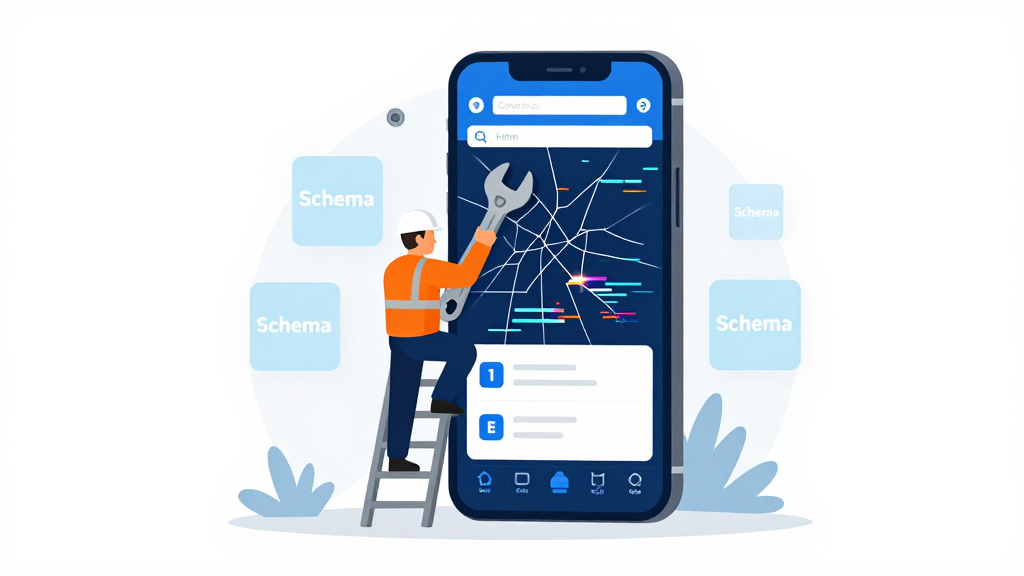
How schema helps solid affiliate sites actually get noticed by AI search
Stop Panicking About AI Search – Fix Your Website’s “Bones” Instead
Everyone’s freaking out about AI taking their Google traffic. But in the rush to panic, most people are skipping the boring technical stuff that actually makes a difference. Oliver Dickinson from GameTime Digital breaks down what iGaming affiliates actually need to do to get cited by AI, and it has nothing to do with magic tricks.
The real question isn’t “Is AI search a threat?” The real question is: How do we make our content so clear that machines want to trust it?
The answer lies in Schema (structured data). This isn’t an SEO gimmick. For iGaming – where trust and compliance are everything – schema is now as essential as having a working website.
Valid Code vs. Useful Information
Lots of sites have schema markup. The problem? A lot of it is a confusing, contradictory mess.
Imagine telling a robot: “This is a 5-star review by John, our top expert.” But then on the next page, John’s name is spelled differently, the date says 2022, and the 5-star score comes from a random number generator with no explanation.
You’re not helping the robot understand you. You’re confusing it. And robots hate being confused. In a sensitive industry like gambling, that confusion gets your content ignored.
The Golden Rule: Optimize for Coherence, Not Just Coverage
Don’t just slap schema on every page. Make sure the story it tells is consistent across the whole site.
What Schema Actually Does (The 4 Questions Robots Ask)
Forget “ranking #1.” Schema helps search engines answer four risk-assessment questions instantly:
- Who is talking? (Is this a real company?)
- Why trust this person? (Is the author a real expert or just a random pen name?)
- What is this page exactly? (Is it a review, a guide, or just a legal disclaimer?)
- Is this info fresh and verifiable? (Is there a methodology behind that 9.8/10 score?)
When a machine can answer those four things without scratching its head, you win.
The Boring Secret to AI Visibility
Forget writing 50 new blog posts. That won’t fix AI invisibility.
Here’s what actually worked for casino affiliates who held their traffic:
- Consistent Authors: They made sure “John Smith” was linked to the same profile URL on every single review page, no exceptions.
- Transparent Ratings: They linked every single “9/10 score” back to a page explaining how they calculate that score.
- Stable Comparisons: Instead of generic fluff, their comparison tables pointed to actual, specific review URLs.
This is boring. It’s not flashy. But it removes “interpretation drift” – that invisible tax where Google’s AI slightly misunderstands what you meant.
How to Actually Implement This (The Checklist)
1. Review Pages: Prove It.
If you claim a casino has “Fastest Payouts,” your structured data needs to back that up with: Who wrote it, who published it, which casino we’re talking about, and when we checked.
2. Comparison Pages: Make it a Spreadsheet for Robots.
If you have a “Top 10 Casinos” list, mark it up so the machine sees a List of Items, not just a blob of text. And make sure the words on the screen match the data code underneath. If they conflict, the robot plays it safe and shows someone else’s site.
3. Trust Pages: Stop Ignoring Them.
The “About Us” page, “Methodology” page, and “Responsible Gaming” page are not just legal furniture. They are the anchor points for trust signals. Use schema here to tell the machine: We are a real team with real standards.
The Invisible Killers (No Error Messages, Just Dead Traffic)
These issues won’t trigger a warning in Google Search Console. They just slowly erode your traffic:
- Mismatched dates (Saying a review is fresh when the page hasn’t been updated in 3 years).
- Ratings with no backup logic.
- Author names changing format slightly on different devices.
You won’t see a big drop. You’ll just see a slow, painful decline that everyone blames on “AI being unpredictable.” It’s not AI. It’s bad architecture.
How to Measure This Stuff
You can’t track “AI Citations” perfectly yet. That’s fine. Here’s how to test if your schema is working:
- Compare a group of pages with fixed schema against a group with messy schema.
- Ignore total traffic volume. Look at Revenue Per Visit. Did the structured pages convert better quality traffic?
The Bottom Line
Schema is not a magic button for more traffic. It’s a force multiplier.
- If your content is trash, schema won’t save you.
- If your content is great but messy, schema is the difference between being cited and being invisible.
In the new AI search world, the winners won’t just be the ones with the best bonus codes. They’ll be the brands that machines can interpret without getting a headache.
“Optimize for Coherence, Not Just Coverage”—that’s the golden rule every SEO should learn. Too many websites cram schema markup in every possible spot, and then wonder why their traffic is dropping. The problem isn’t the lack of markup, but its inconsistency. “John Smith” on one page, “J. Smith” on another, the date “2026-03-15” varies everywhere, and rankings hang in the air without a methodology. AI doesn’t tell you, “You’ve confused me.” It simply stops citing you. Implementation question: How do you recommend auditing an existing site for “interpretation drift” across thousands of pages? Manual verification is impossible. Are there tools that show not just “schema errors” (missing fields), but semantic contradictions (“on page A the author is John, on page B the same content is attributed to Jane”)?
Special shout-out to the list of “invisible killers”—errors that don’t show up in Google Search Console but slowly kill your traffic. Mismatched dates, ratings without backup logic, and author formats that keep jumping around. This is the most insidious type of technical debt: you don’t get a red flag saying “you have an error”; you just see traffic slowly slipping away and chalk it up to “the API is acting up,” “the algorithm updated,” or “the competition is doing well.” But the problem lies in a thousand small inconsistencies that have accumulated over two years. A question of prioritization: if the budget is one engineer for a week, which type of pages should you start cleaning up these invisible issues from? The main money pages (top-10 casinos)? The root trust pages (“About Us,” “Methodology”)? Or with the oldest content, where the last update date differs most significantly from the publication date?